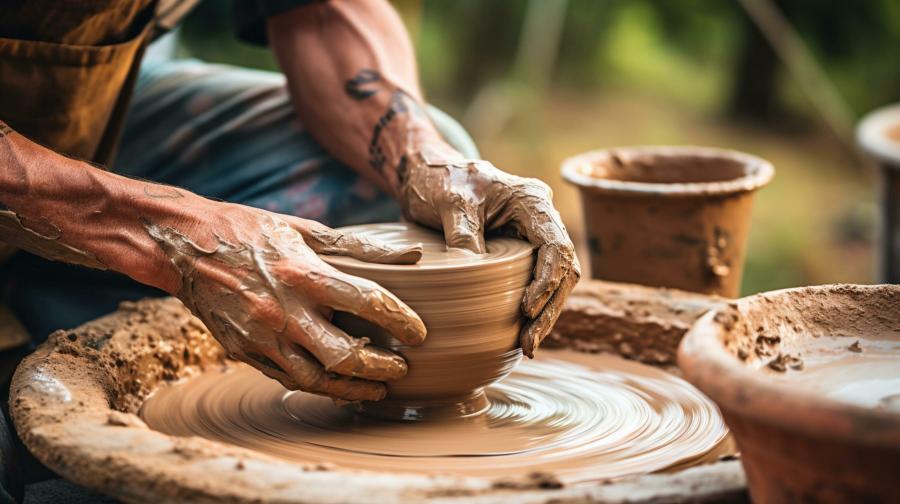
Michael Coffey’s poem “Art of Reformation” uses the metaphor of clay on a pottery wheel, describing how the original unformed block can be shaped “into a dove or a fish or a water bowl”. I’d not thought before about the choice that comes to the potter next—to
put it in the kiln and fire it
preserve its beauty in brittle perfection
or keep it supple and soft, wet and moving
so that when the times require creative reformation
you can give thanks for the dove, the bowl, the vase
then reimagine what this poetic mud can be
If God is a potter and we are clay (as the biblical metaphor goes), God has decided not to fire the clay at a given point of supposed perfection, not to freeze out the possibilities of change, movement, and growth. What a gift—that the church has freedom to keep changing, growing, and reimagining what it means to be mud in the Potter’s hands, serving God’s desires in new ways.
We experience the change-ability of church in the building this weekend at Edina Morningside and Linden Hills UCC. The sanctuary has been transformed into a set for Morningside Theatre Company’s intergenerational production of “Beauty and the Beast”, and worship with communion will take place on that set. This means disruption for those of us leading and participating in worship—where to stand, what microphones work, how to project, whether technology will come through to include folks on Zoom, etc. I can imagine (and have felt myself) occasional dismay that the things we church folk count on to stay the same are shifting instead, requiring extra energy to meet the changing moment. But I also know, trust, and have experienced that what “church” means in the 21st century must morph if we are still to serve God’s people, many of whom are not participating in our traditional forms. I’m proud of how we are practicing flexibility and change, working through discomfort to catch the wind of Spirit. We navigated tech challenges last week with gracious humor, then spent a sacred ninety minutes in the sanctuary afterward sharing our dreams for faith “within, among, and beyond” the church. This Sunday, we will set a communion table right there on the changeable sanctuary stage, a metaphor for all our life together.
I hope you’ll come to see the production that many in the church and community have worked hard on for months. Marvel with me at the gift that a “youth ministry” spirit from a summer theatre camp years ago has morphed into the present moment, where dozens of intergenerational actors and stagehands from the church and neighborhood sing, dance, and create joy for audiences of hundreds. Thank you for trusting the precious gift of this faith community to one another, to me, and to a future church on whose behalf we practice such divine endeavors. Above all, in the poet’s final lines, we trust the “animation of the potter Spirit keeping all things fluid… freeing our joints to be the art of God’s desire”.

 Pastor Oby Ballinger