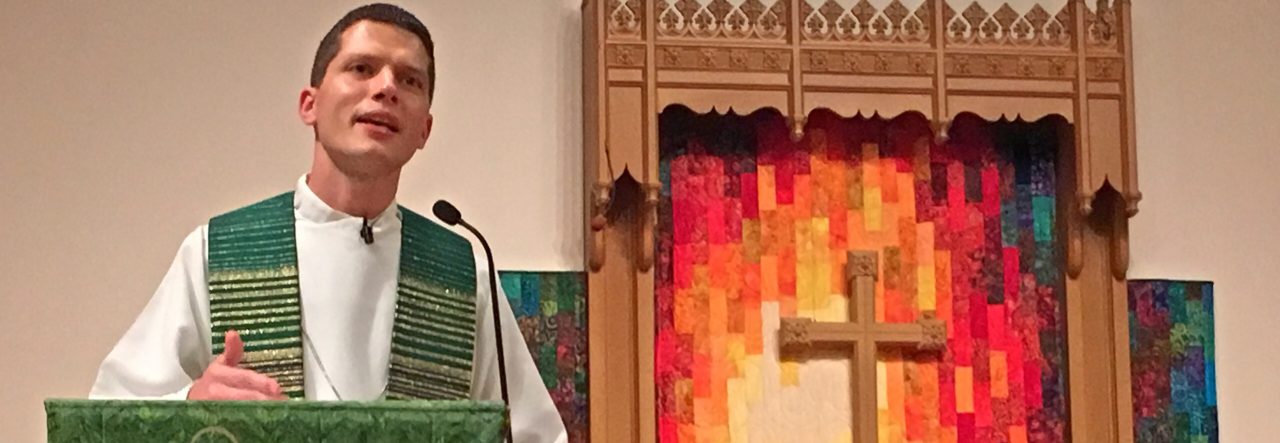
Good morning! As Moses’ second sermon to the people continues today (Deuteronomy 7-10), he gives instruction for how the Hebrew people are to live in their new land in light of who God is, and what God has done already in salvation history (for the matriarchs/patriarchs, slaves in Egypt, and wanderers in the wilderness). Throughout, the writer emphasizes the God’s benevolence (at least to the “chosen people”) and the need for loyal obedience among the Hebrews.
Author: Oby Ballinger
Deuteronomy 4-6
Good morning! Today’s passage (Deuteronomy 4-6) concludes the first address of Moses to the people about to enter into Canaan and begins a second address. Remember that this is directed to the younger Israelites who have been found worthy to enter Canaan because they came of age after the Exodus. In other words, they have known what it is to rely fully on God.
Deuteronomy 1-3
Good morning! Today we begin Deuteronomy, the last of the five books of Torah which are centrally important to Jews, and so also to Jesus and his peers. This book’s English name means something like “the second law-giving” captures the way the heart of Deuteronomy (chs. 12-26 especially) is a longer version of the core legal covenant between God and the Hebrews described in Exodus 20-23. Though most of Deuteronomy takes the form of addresses by Moses to the Hebrew people on the cusp of entering Canaan, biblical historians have identified this as most likely the book discovered by the reforming King Josiah in 622 BCE (Before the Common Era). Its expansion of the legal code so closely tracks the actions of King Josiah that it was presumably the blueprint for his reforms. Further, Deuteronomy has been informed by the insights of later biblical prophets like Amos, Hosea, Micah and Isaiah, because their themes are present in the ways that earlier Exodus covenant is here expanded. In Deuteronomy we will read far less of priestly regulations, and far more of the moral and ethical underpinnings for righteous Hebrew life.
Image and Inscription
Community United Church of Christ (Saint Paul Park, Minnesota)
Scripture: Mark 12:13-17
Fill in the blank to this well known proverb: “There are only two things certain in this life: death and _____.” Yes—taxes! (Everyone’s favorite subject!) This is the time of year when many of us are filing—or at least thinking about filing—our taxes. Some of us wish we’d taken out more withholdings from paychecks or retirement disbursements. We lament that if we’d made just a little less cash we’d be in a lower tax bracket, but the government is happy to accept the overage. Of course this conversation isn’t confined to the months just before the filing deadline. All year round our elected leaders (and those who hope we will caucus for them on Tuesday night) talk about taxes being misapplied, too high or too low. Taxes are a constant source of conflict and controversy.
Numbers 35-36
Good morning! Thank you again for sticking with these readings even when they’re difficult, and for sharing with me your progress when we meet in person. Your encouragement helps me greatly, and I’m so thankful for that which I’ve heard recently!
Today’s final two chapters of this book (Numbers 35-36) give an interesting window into the Hebrew criminal justice system, and then finish by returning to the question of marriage practices for women with inheritances of land. The concern of these chapters, as throughout the book of Numbers, is the organization of Hebrew life in faithfulness to the promises and sovereignty of God.
Numbers 33-34
Good morning! Today, Numbers 33-34 directs our attention to land—both that which was traveled after the Exodus and that which will be overrun in the conquest of Canaan.
Numbers 31-32
Good morning! And then, I’m sad to say that it’s all downhill from that brief greeting. In today’s passage, we see in graphic detail how the writers of Numbers 31 imagined the early fighting and conquest would have gone (and we are likely moved to prayer that it was not actually so). Numbers 32 seeks to answer the question of how some Israelites settled east of the Jordan, when the “Promised Land” was presumably only on the other side, after crossing over the river. The latter chapter needs no further commentary, but the former is truly incendiary.
Numbers 29-30
Good morning! In today’s passage we get further instructions concerning festival sacrifices, and then hear about when the vows of women may be maintained or broken. Both chapters highlight ways of maintaining devotion to God, but the latter one involves obedience to men as well.
Numbers 27-28
Good morning! Today in Numbers 27-28 we first see several stories of new precedents set by new voices who have come of age in the wilderness, then follow it up with a chapter that clarifies the offerings that are to be part of the regular sacrifices of Israel.
Numbers 25-26
Good morning! Today we read the last two chapters of the “wilderness journey” section of Numbers, which includes a story of zealous vengeance on God’s behalf, and then another census.

