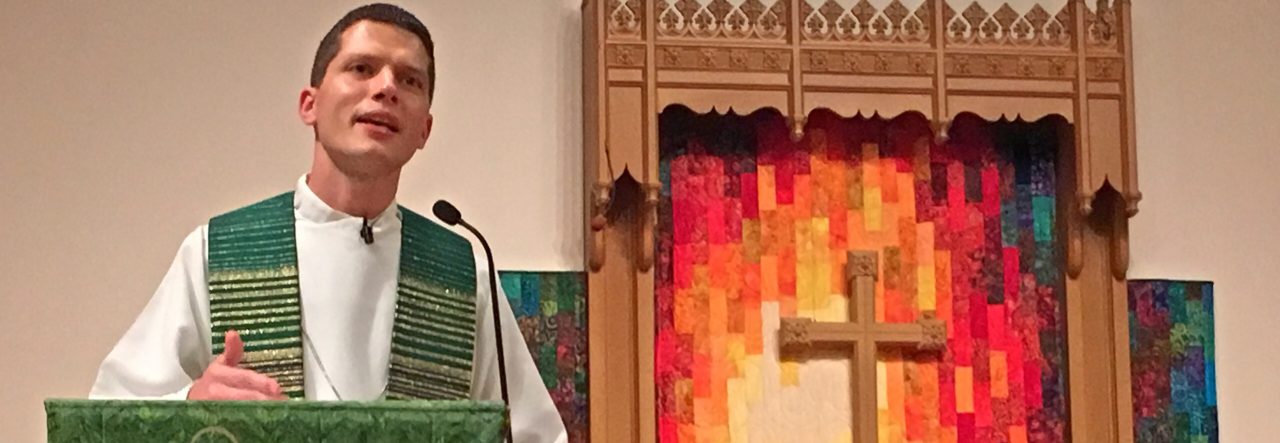
Spirit Soup

Community United Church of Christ (St. Paul Park, Minnesota)

Scripture: Acts 2:1-4; 1 Corinthians 12:1-13

Cooking is one of the things I enjoy doing to relax, even though Javen does most of our cooking these days. I’ve learned a few things about my cooking over the years. I have to be willing to give it the time it takes, and to clean up the mess afterwards. My food turns out best when I’m cooking a familiar recipe or it’s a meal that forgives mistakes and imprecision. This is why (when the season is right) I make a lot of stews.

Continue reading “Spirit Soup”

2 Chronicles 17-20

Good morning! Today’s passage (2 Chronicles 17-20) focuses on the next generation leader in Judah, Asa’s son Jehoshaphat. Whereas Asa went from good to bad over the years of his reign, Jehoshaphat stays remarkably true to Israel’s God throughout his life. He does get into dicey situations, but his uprightness helps to keep bad things from becoming worse. Jehoshaphat’s example, and the counterexamples of others in these chapters, show us the importance of integrity, staying true to oneself and one’s God.

Continue reading “2 Chronicles 17-20”

2 Chronicles 13-16

Good morning! An argument of biblical interpretation can be made, with some textual evidence, for the evolution of God’s character throughout the Bible. Early on, God seems unpredictable and irrational, launching an attack at Moses or hardening Pharaoh’s heart against granting what God asks. The mystery of God’s will is the main explanation for whether things go well or not. But by the time of the divided kingdoms, biblical writers seem to have a stronger sense of God as always good and human beings as more inexplicable. Thus, human misbehavior is the cause of misfortune, not God’s capricious nature. We see this in the Chronicler’s theology today in 2 Chronicles 13-16, where success and failure in Judah—especially in battle—depends solely on faith in God.

Continue reading “2 Chronicles 13-16”

2 Chronicles 9-12

Good morning! What are we to think when bad things happen to apparently good people? Today in 2 Chronicles 9-12, we conclude a description of Solomon’s reign and then see what comes with his son Rehoboam’s rise to the throne.  The Chronicler interprets events theologically, trying to identify the role of God in civil war and defeat. By identifying suffering as God’s will, and as divine punishment for sin, the author opens up the possibility for changing circumstances by changing hearts. The “cause and effect” may work for a theological historian writing after the fact, but I have a harder time accepting this logic to make sense of much suffering today.

Continue reading “2 Chronicles 9-12”

1 Chronicles 21-23

Good morning! After bringing the ark back to Jerusalem, then consolidating the kingdom and defeating enemies, David is now on to the third and final major task that the Chronicler focuses on: preparing for the temple’s construction. The process starts today in 1 Chronicles 21-23, but it’s of such importance to this writer that the whole narrative of the building extends another dozen chapters beyond today.

Continue reading “1 Chronicles 21-23”

1 Chronicles 17-20

Good morning! Today’s passage (1 Chronicles 17-20) largely reiterates the military battles and conquests of David that we read in 2 Samuel 7-8, 10 and 21. As you can tell from that list, much of David’s biography is left out of this revised history! What matters to the Chronicler aren’t the “messy details” of David’s life (Jonathan, Bathsheba, Absalom, etc), but David’s unerring faithfulness. The strategic storytelling here illuminates by omission, at least when held up against the 2 Samuel version of these events.

Continue reading “1 Chronicles 17-20”