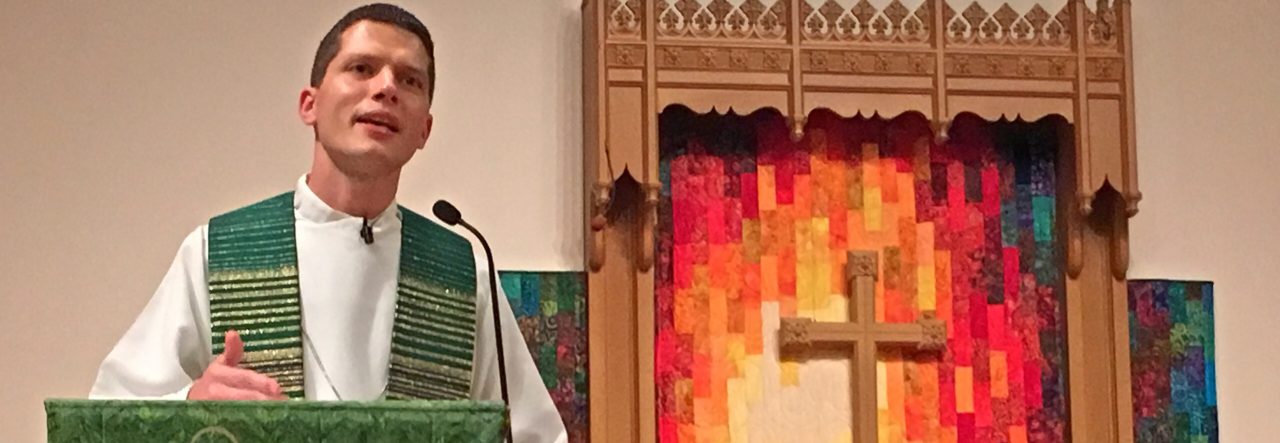
Good morning! Today with First Thessalonians, we read what most scholars believe is the earliest existing Christian literature. This letter to believers in Thessalonica is written early in the fifth decade of the Common Era, meaning it’s perhaps only twenty years after the crucifixion and resurrection of Christ. In its theology and counsel, we see a recently-converted Paul trying to shepherd a group of Christians to keep the faith despite hardship, expecting the resurrected Christ’s imminent return.
Month: December 2016
Colossians
Good morning! Today we read the letter to the believers in Colossae, traditionally called Colossians. This book, though shorter, has much in common with the book of Ephesians. Both have disputed authorship (Paul or perhaps another early disciple writing in his name), apparently arise from Paul’s time in prison, and move stylistically from doctrine to implications for daily life. Colossians rather uniquely emphasizes the status of Christ as fully equal to God, which some scholars use as justification for a later composition date since understandings of Christ (“Christologies”) gradually evolved from emphasizing humanity to emphasizing divinity.
Philippians
Good morning! How fitting that just prior to Joy Sunday (the Third Sunday in Advent), we read the lovely and joyful book of Philippians. I have always loved this book for its ability to evoke joy and gratitude in every season. I chose Philippians 4:4-9 for my ordination service, and continue to refer to it regularly. What I didn’t remember until rereading the book now is that Paul writes this book of joyful encouragement from prison, amid the peril of possibly imminent death. This experience seeps into Paul’s letter here, not as fear but as confident and encouraging joy.
Ephesians 4-6
Good morning! While reading the second half of Ephesians today (chapters 4-6), I’m reflecting on the fact that this epistle is rather anonymous. Unlike other letters we’ve read to this point, there is very little reference to the local community or their issues, suggesting that the advice and instruction given here could be addressed to any community. Except for several veiled references to imprisonment, the writer doesn’t self-identify much either. It’s almost as though “Paul” could have been anyone, writing a letter chock full of opinions and putting it in Paul’s name. Such skepticism may be unwarranted on my part, and likely arises from the fact that I want to delegitimize the instructions given here. Because the one thing that is very clear about this letter are its explicit instructions on how to live as a Christian in society and at home. We’re going to have some problems with them in the 21st century.
Ephesians 1-3
Good morning! The apostle Paul connects much more positively with the church in Ephesus than he does with the Galatians, as we hear right from the start of this next letter: “To the saints who are in Ephesus and are faithful in Christ Jesus”. There’s some speculation that this may not have been written by Paul, but by someone else in his name. Later books are more obviously written by another author, but I’m not sure what to think in this case. Even if it’s not directly Paul’s writings, these chapters seem to align with Paul’s theology and perspective as we have it in more verifiable texts. Paul’s key focus in this book is the church—its theological unity in today’s passage, and how that is put into practice tomorrow.
Galatians 3-6
Good morning! Paul begins today’s second section of Galatians (chapters 3-6) by writing, “You foolish Galatians!” We may feel like fools trying to get Paul’s analogies and arguments, but you needn’t be a logician to make sense of the general claims here. Paul’s basic argument is that by faith in Jesus Christ, divine grace covers a person and she is set free from the obligations of religious law. Believers use their freedom in Christ not to gratify every selfish pleasure, but to bear one another’s burdens. Furthermore, the physical and spiritual differences between people become inconsequential, since all are one in Christ.
Galatians 1-2
Good morning! Today and tomorrow we read through the book of Galatians, written to churches in the Roman region of Galatia. That region evidently had a movement of rival preachers who claimed that certain Jewish practices and customs—especially circumcision—must be practiced by Gentiles in order that they could be called Christians. Paul sharply rebukes (as he is wont to do) those who suggest there is anything beyond belief that is needed for salvation. This book is sometimes nicknamed “Luther’s book”, because it most fully underscores Luther’s conviction that justification before God comes through faith and not works of any kind. Paul will get into the theological argument in what we read tomorrow, but today in Galatians 1-2 he claims full apostolic authority to instruct them based on his biography to this point.
2 Corinthians 10-13
Good morning! Today we finish out the book of Second Corinthians, and the ending doesn’t seem to follow logically from the start. Whereas yesterday we read Paul’s painstaking efforts to ingratiate himself with the Corinthians again, today in 2 Corinthians 10-13 Paul is anything but ingratiating! I tend to agree with those who say (most of) this is from another letter that has been grafted into 2 Corinthians.
2 Corinthians 4-9
Good morning! If the ancient Olympic games had been held in Corinth rather than Olympia, Paul would have won a medal in the category of (conceptual) gymnastics. I say this for what he tries to pull off with today’s passage. In 2 Corinthians 4-9, Paul reflects on human impermanence, exhorts reconciliation, justifies his prior angry letter to the Corinthians, redirects attention to the more popular Titus, and then boldly asks the Corinthians to fulfill their pledge of funds to support the Jerusalem mission! I’m curious to know what catches your attention in all of that, but to limit my comments and not add to what there is to read, I’ll just focus on the final two chapters, concerning generosity.
2 Corinthians 1-3
Good morning! Today we move from First to Second Corinthians, written some months or years later. This letter reflects a season of pitched conflict with the Corinthian church, and Paul is working hard to get back credibility among them. Paul references “all the saints throughout Achaia” in his opening salutation, which some scholars suggest is a way of calling attention to the greater community of supporters that Paul has in the region around Corinth, beyond the city itself. The structure of the letter is odd: a conciliatory section at the beginning leads toward a financial pitch in the middle. However, the final part of the letter is inflammatory again and doesn’t seem to flow from the former, suggesting that perhaps the end of this book is a separate, earlier letter (perhaps even the hostile one sent during that prior controversy). Whatever the history of its composition, the book has been canonized as one letter. Today the first three chapters show Paul seeking reconciliation with the Corinthian community.
 Pastor Oby Ballinger